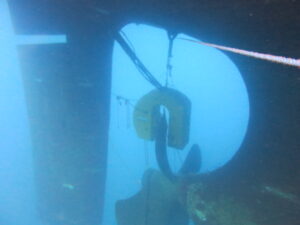
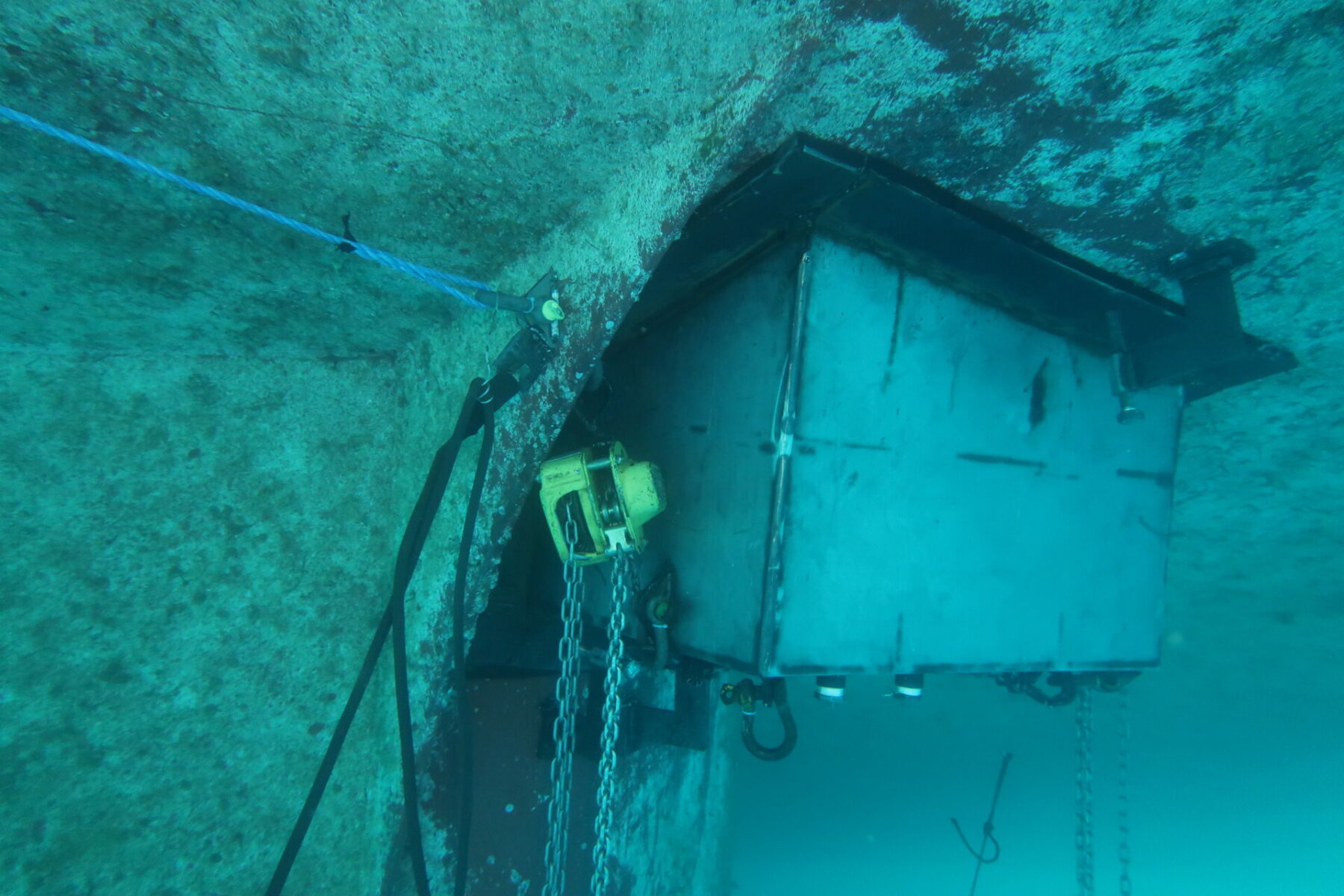
For the operations in this article our teams traveled across Europe to perform hull repairs on a wide range of vessels, including, a container vessel, a drill ship, a roro vessel and a tanker.
Insert repairs in Rotterdam and Palermo
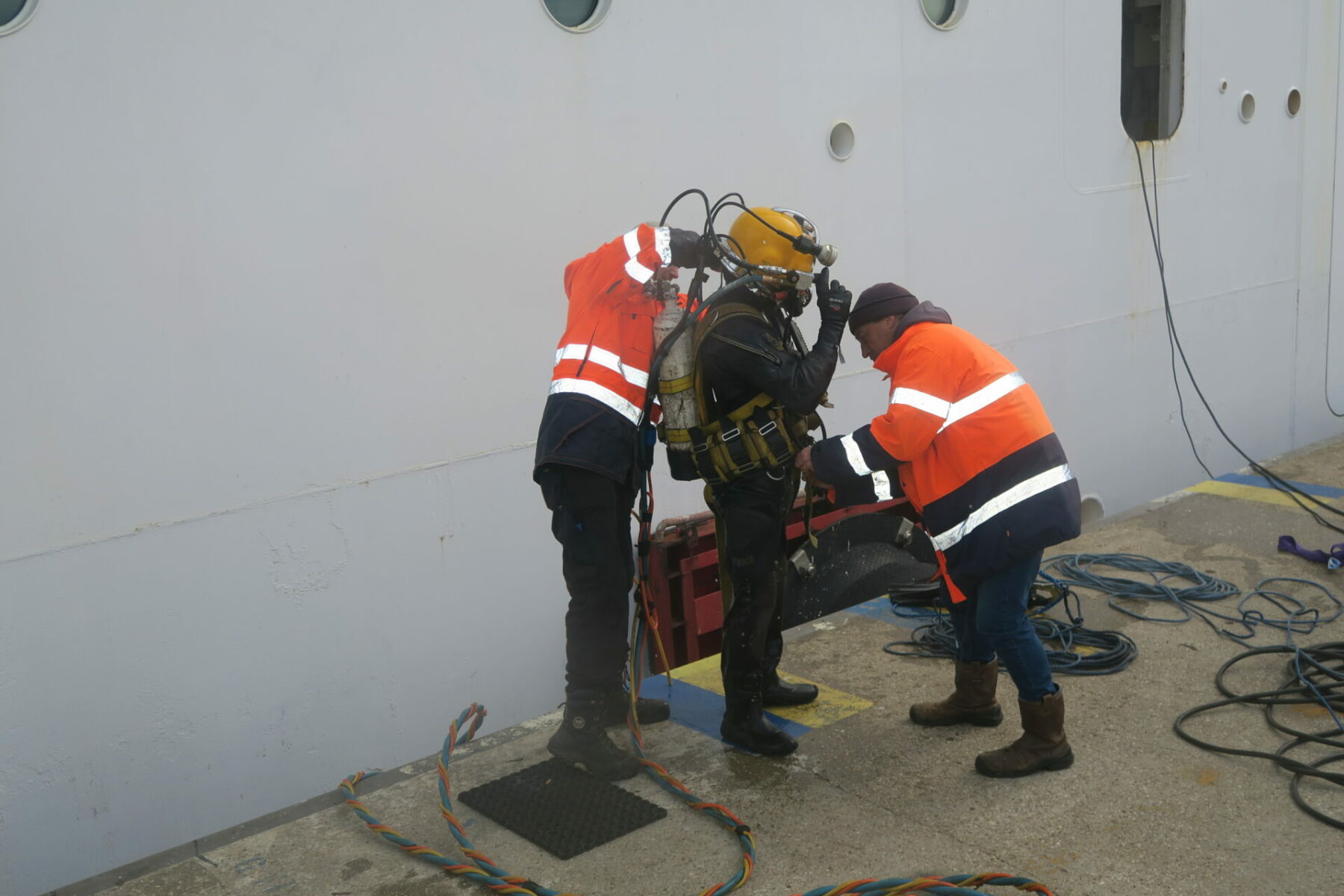
In Rotterdam our divers performed insert repairs on a 145-meter tanker and a 300-meter container vessel. These operations were carried out afloat with the use of an external cofferdam.
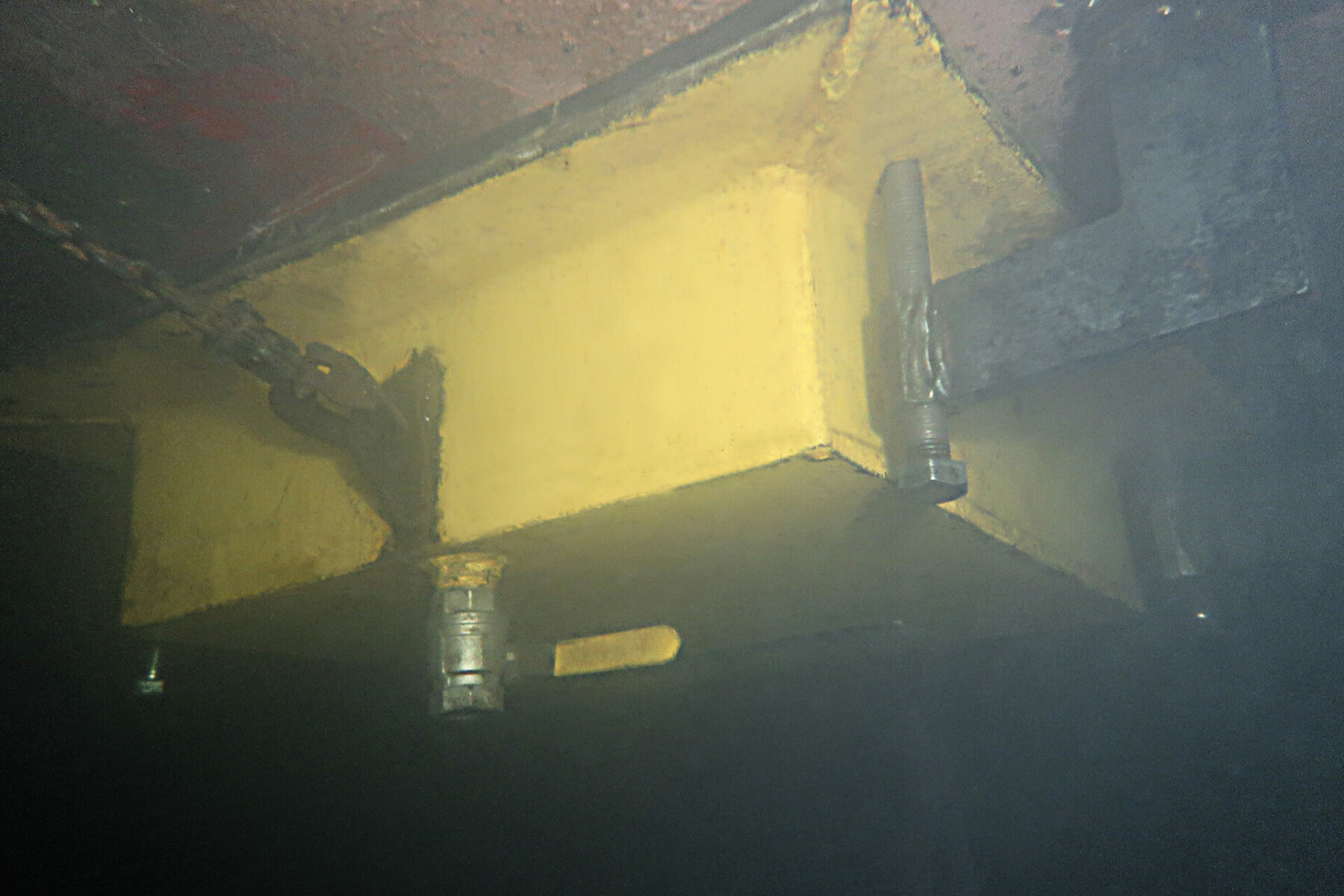
A wide range of standard cofferdams is available at the Hydrex offices, but a tailor-made cofferdam can also be created to fit a specific hull shape. This was the case for the insert repair on a 228-meter drill ship in Palermo, Italy.
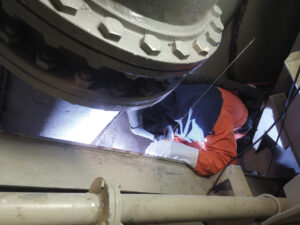
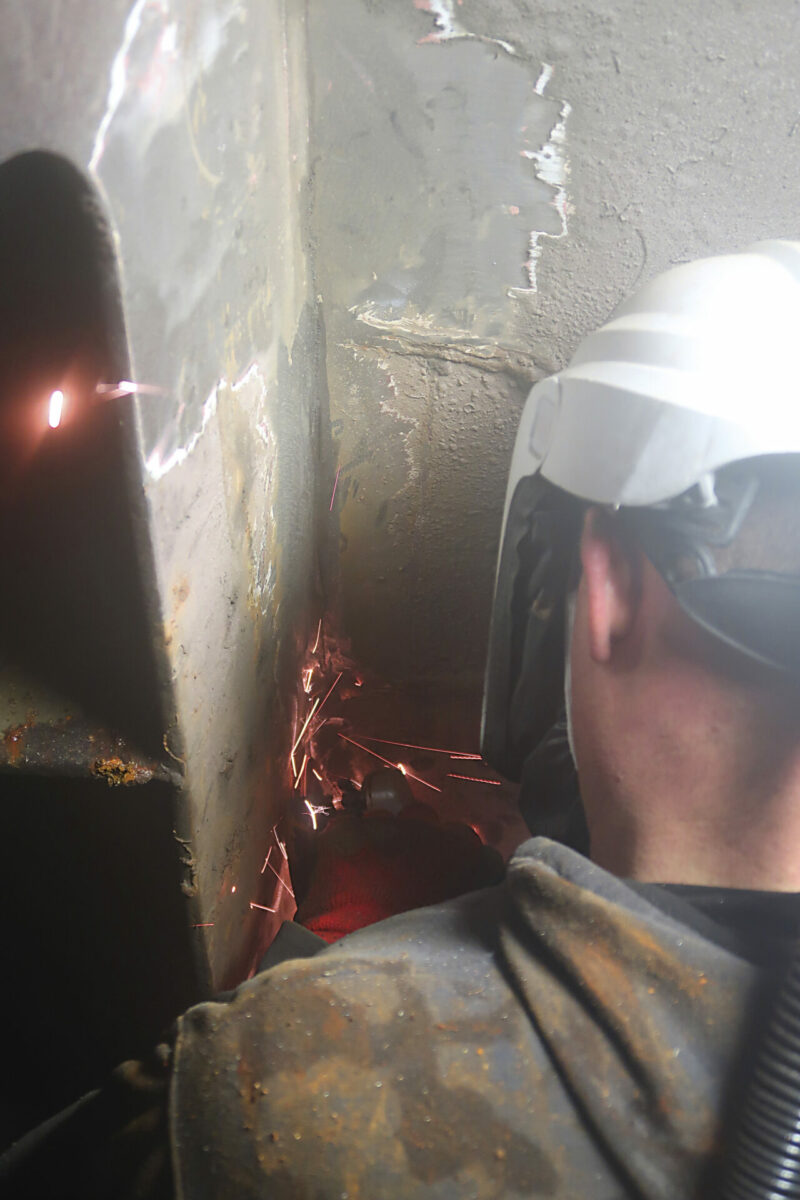
Our divers start an insert operation by installing a cofferdam on the waterside of the affected plating. Next, they remove any frame, pipe or other obstacle covering the area on the inside. The damaged plating is cleaned and prepared for the operation.
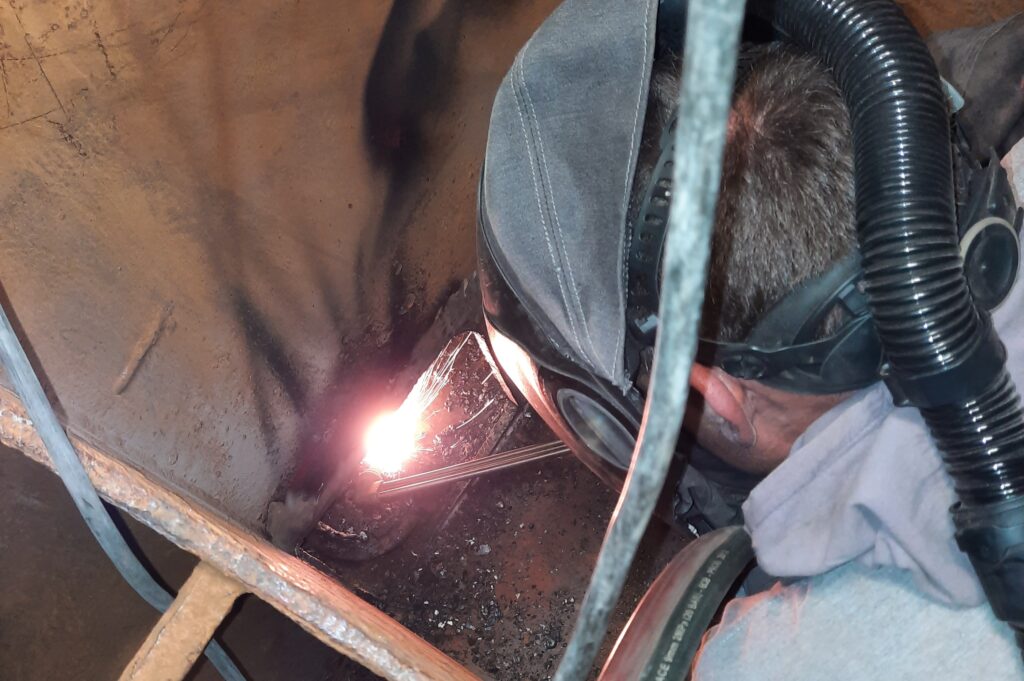
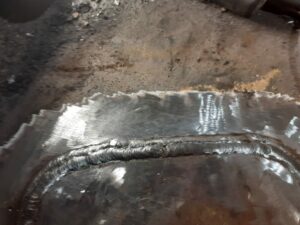
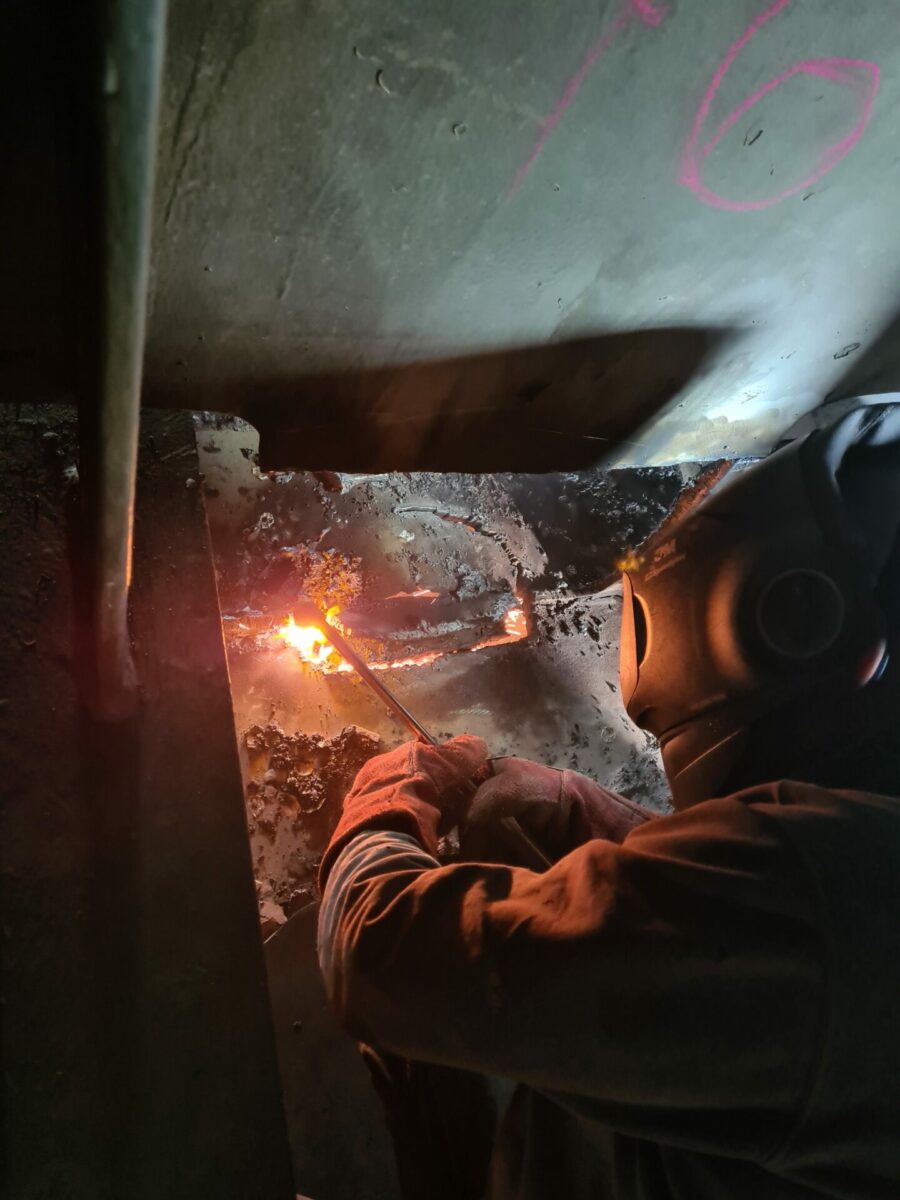
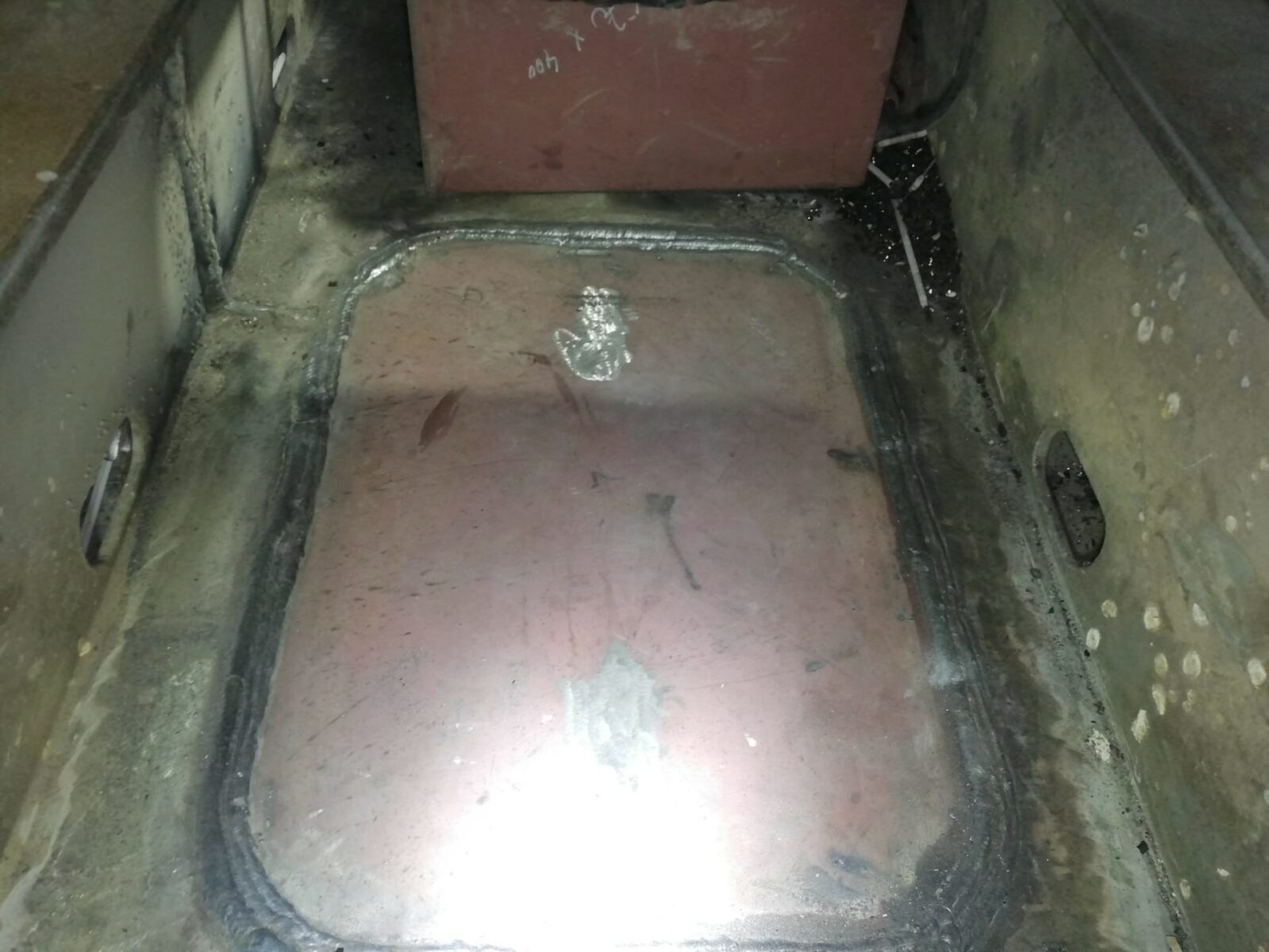
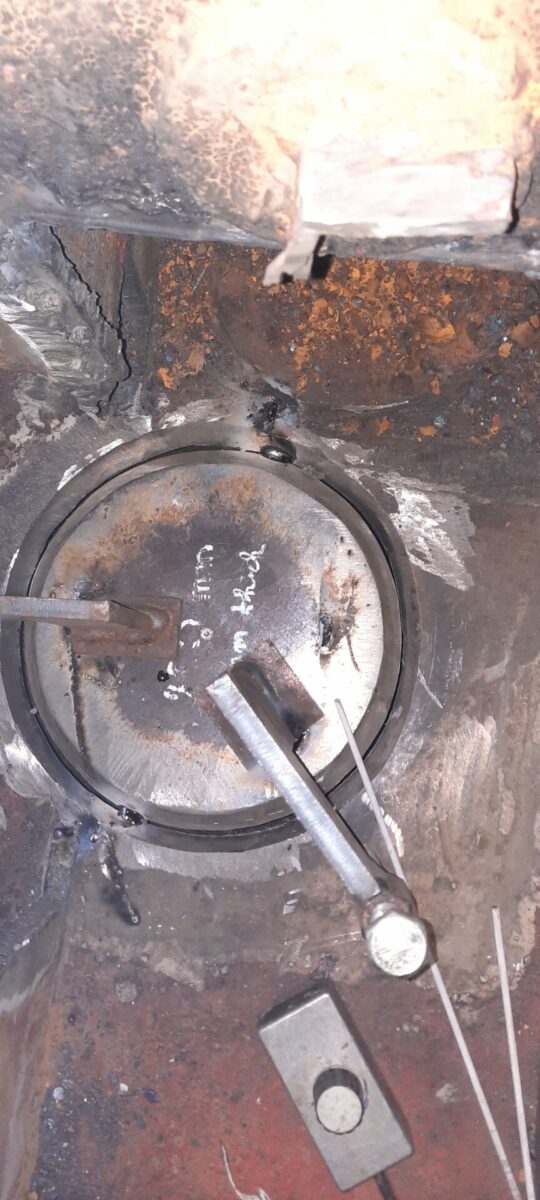
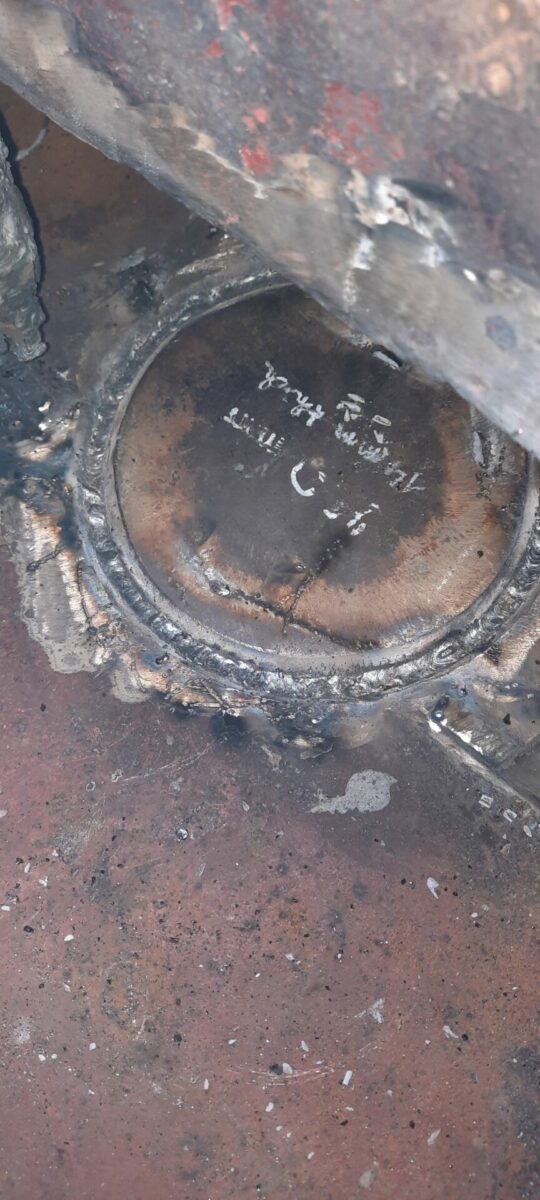
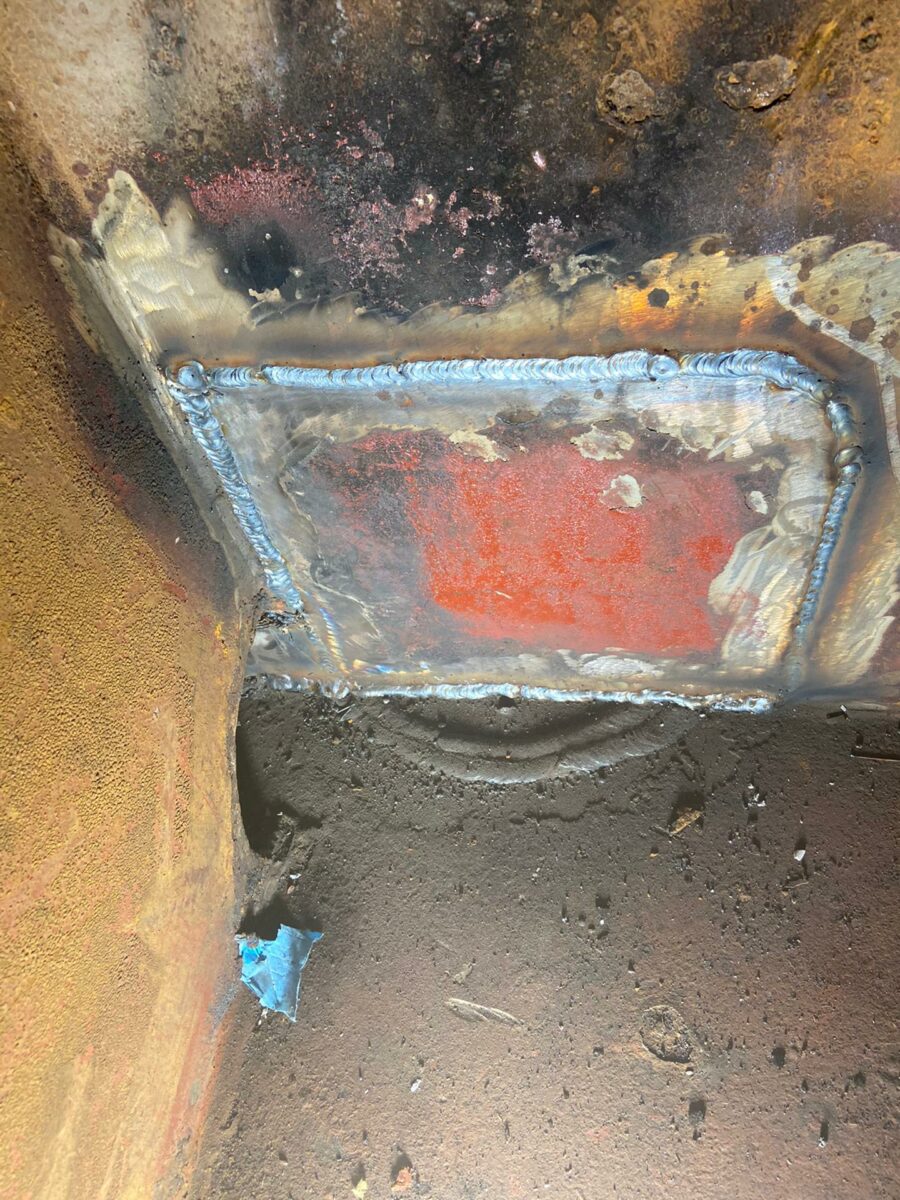
A section of the damaged plating is then removed. The size of this area is decided in coordination with the classification society and the owner. Next the team prepares the edges of the hole for the insert, and they position the new plate. The insert is then welded following the Hydrex procedure for insert plates, using a full penetration weld.
Next an independent inspector carries out ultrasonic testing and the repair is approved by the classification surveyor who is present during the operation. Finally, the diver/technicians reinstall any obstructing parts they removed and detach the cofferdam from the hull.
Crack repair in Zeebrugge
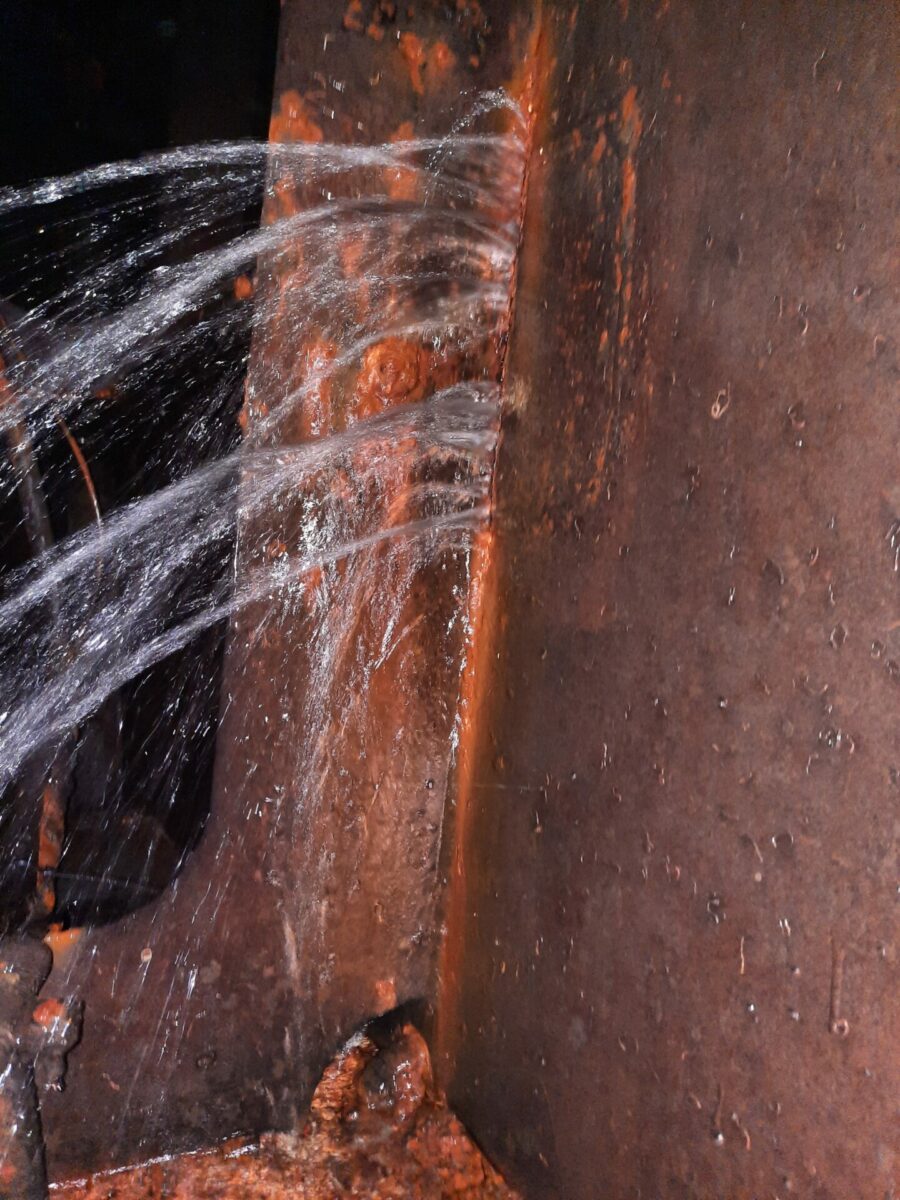
For smaller damages like crack repairs, it is not always necessary to install a new insert. This was the case for a 180-meter roro vessel in Zeebrugge, Belgium that had a leak in its ballast tank. Because our fast response centers have a large stock of state-of-the-art equipment ready, mobilization for smaller operations like this can be almost immediate.
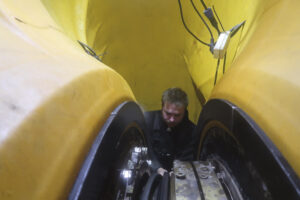
When the work area was certified gas free, the divers started the operation with an inspection of the damaged area on both sides of the hull. Next the team installed a cofferdam on the outside of the hull. This allowed them to perform work on the crack inside the ballast tank without water ingress.
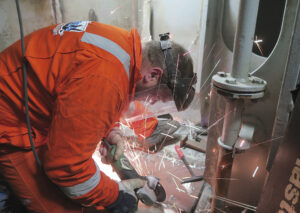
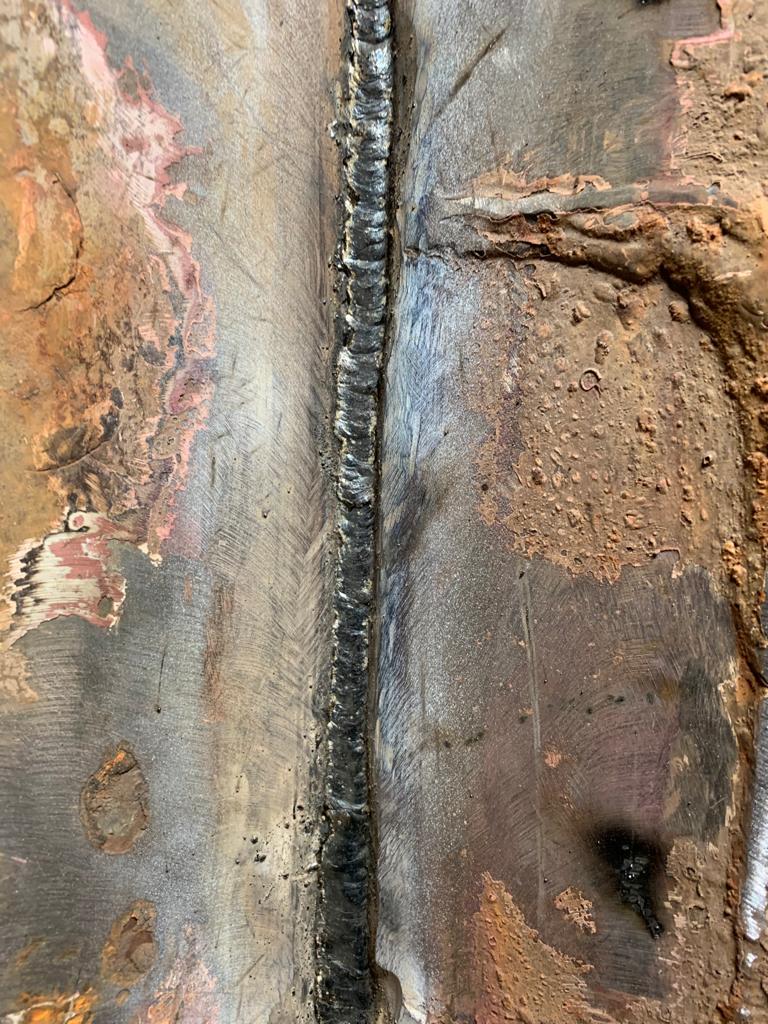
The team then removed the frames to gain access to the crack and take the exact measurements: 510 mm. The crack was ground out over its entire length and filled with our class approved full penetration welding.
The repair was inspected and approved by the attending class surveyor. The operation was concluded by removing the cofferdam.
As a result of this temporary repair, the owner of the vessel did not have to go off schedule for an emergency visit to drydock but could make arrangements for a follow-up repair at a more convenient time and location.
Conclusion
We have the know-how and experience needed to find the best solution for any problem you might encounter with your ships. This can be a simple routine repair or a unique complex one, as illustrated by these case studies.
All repairs are performed to the highest technical standards by our teams following in-house developed procedures. These operations are approved by the major classification societies.
Our goal is to keep you sailing with no delay.