Damage to propeller blades can seriously affect a vessel’s performance. Bent or broken blade tips can cause vibrations, reduce propulsion efficiency and even prevent a ship from continuing its voyage. Fortunately, even extensive damage can often be repaired while the vessel remains afloat, avoiding the need for a costly drydock visit.
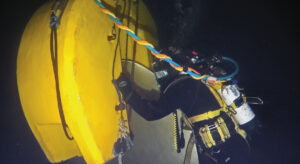
Our diver/technician teams regularly carry out underwater propeller repairs using specially developed equipment and techniques. Depending on the extent of the damage, blades can be straightened back to their original shape or cropped to restore the propeller’s balance and efficiency.
Three recent operations on a bulk carrier in Spain, a small cargo vessel in Portugal and a crude oil tanker in Denmark demonstrate these different approaches. The work ranged from straightening four severely bent blades to cropping damaged sections and carefully balancing propellers with missing blade tips.
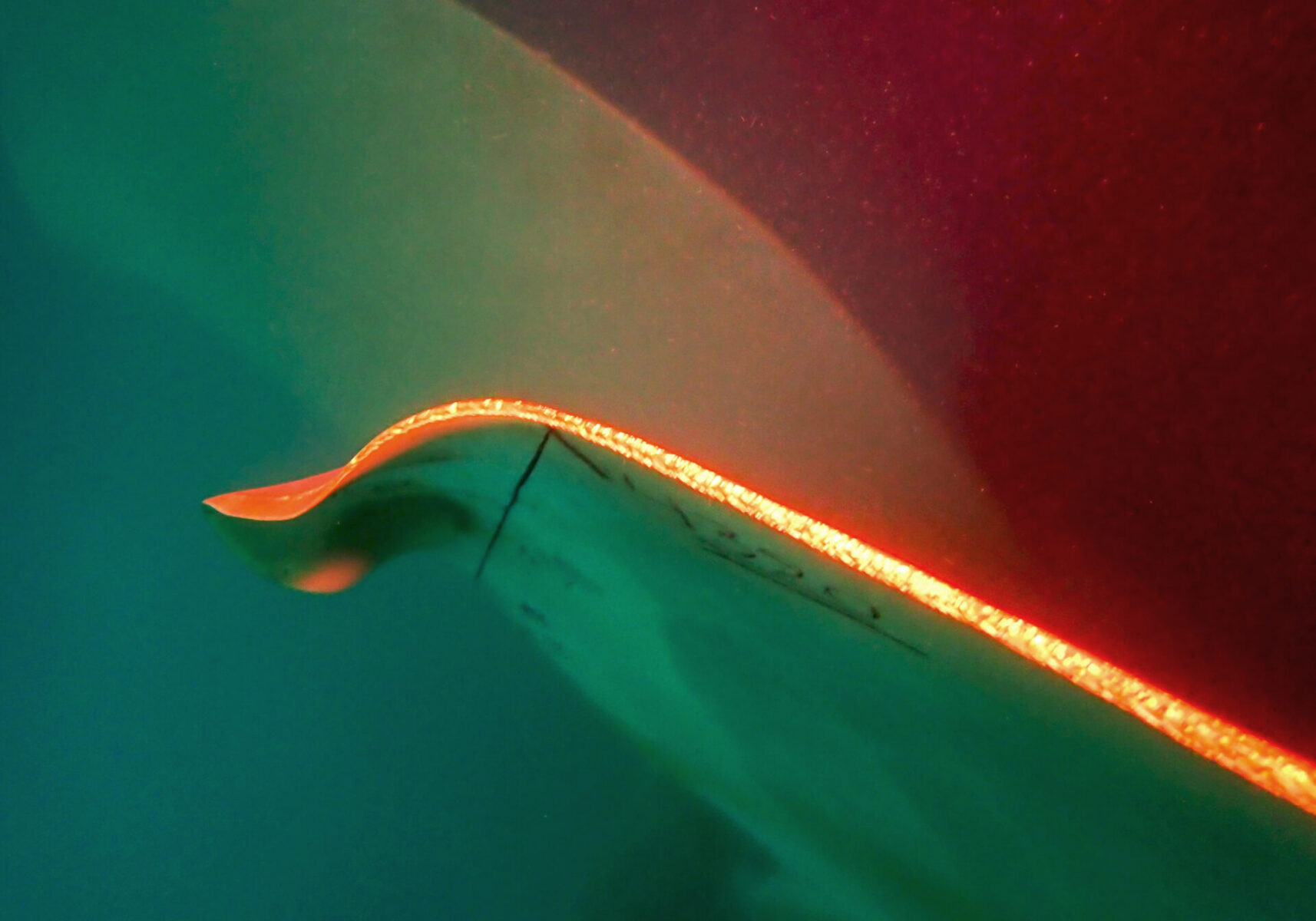
Four propeller blades straightened in Spain
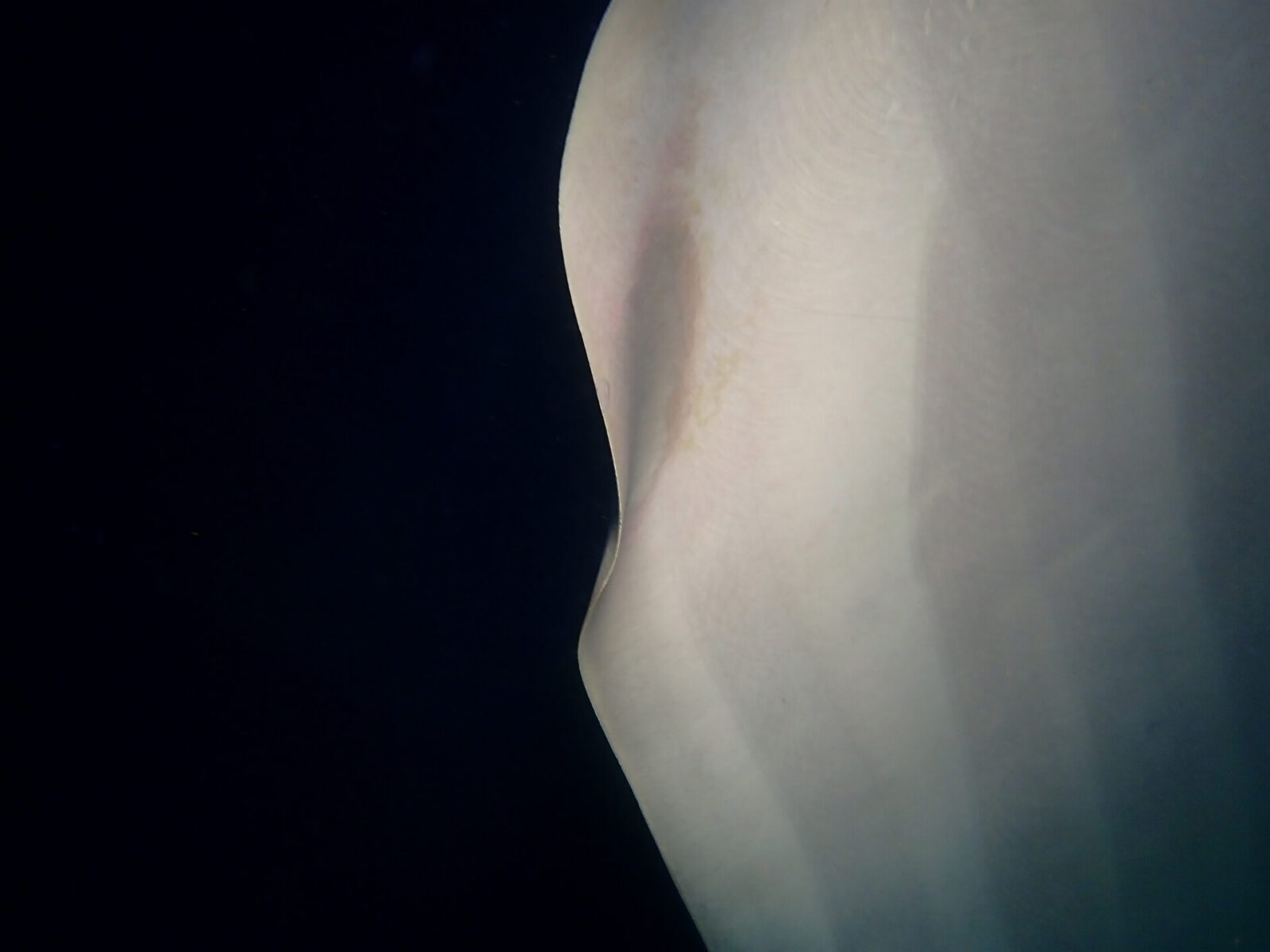
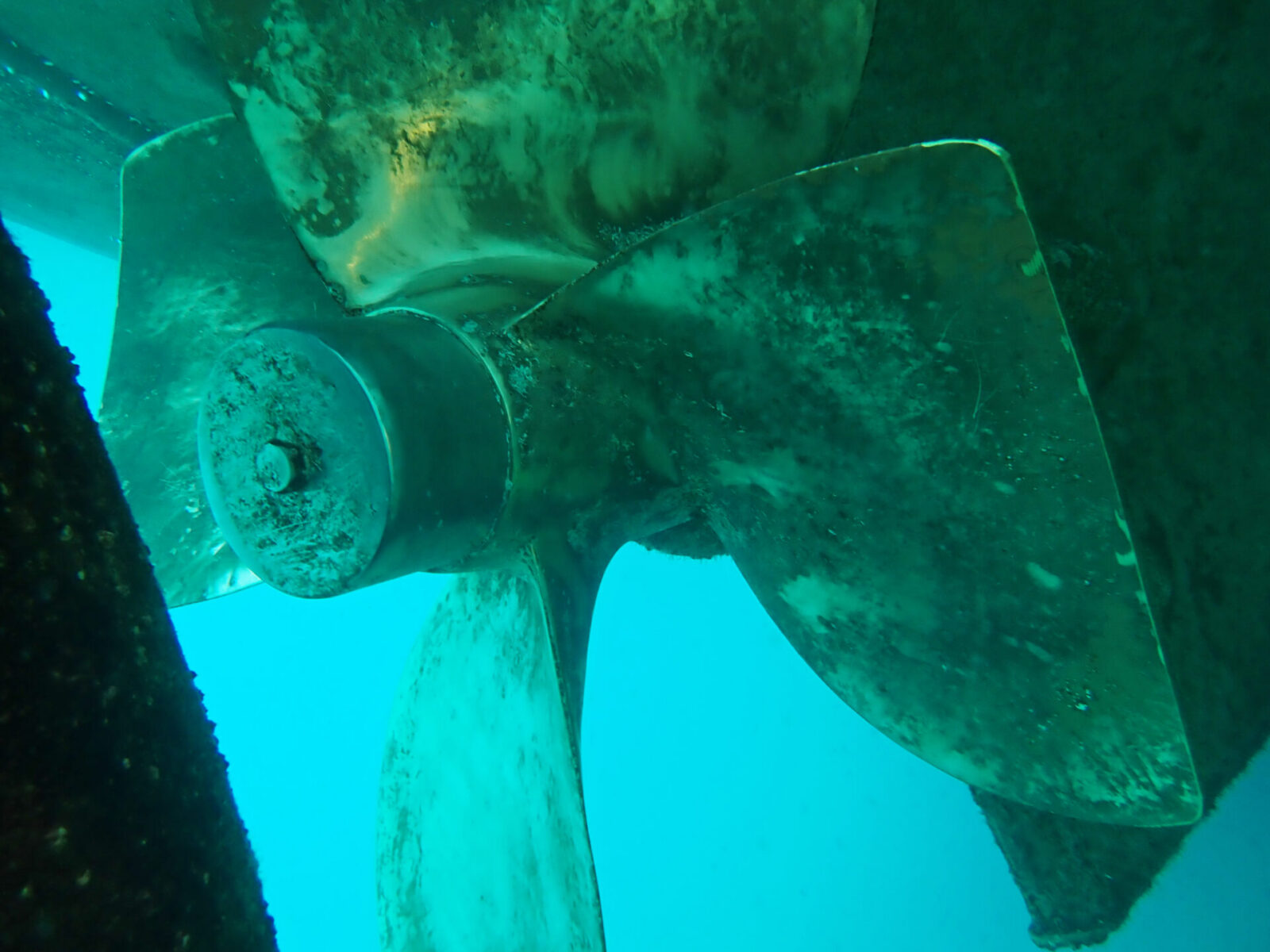
Our team was called to Gijón, Spain, to carry out a propeller repair on a 190-meter bulk carrier. An inspection revealed that all four blades of the vessel’s fixed-pitch propeller had suffered significant bending damage.
The tips were bent at angles ranging from 20 to 45 degrees. As no visible indications of cracking were found, underwater cold straightening was selected as a suitable repair method.
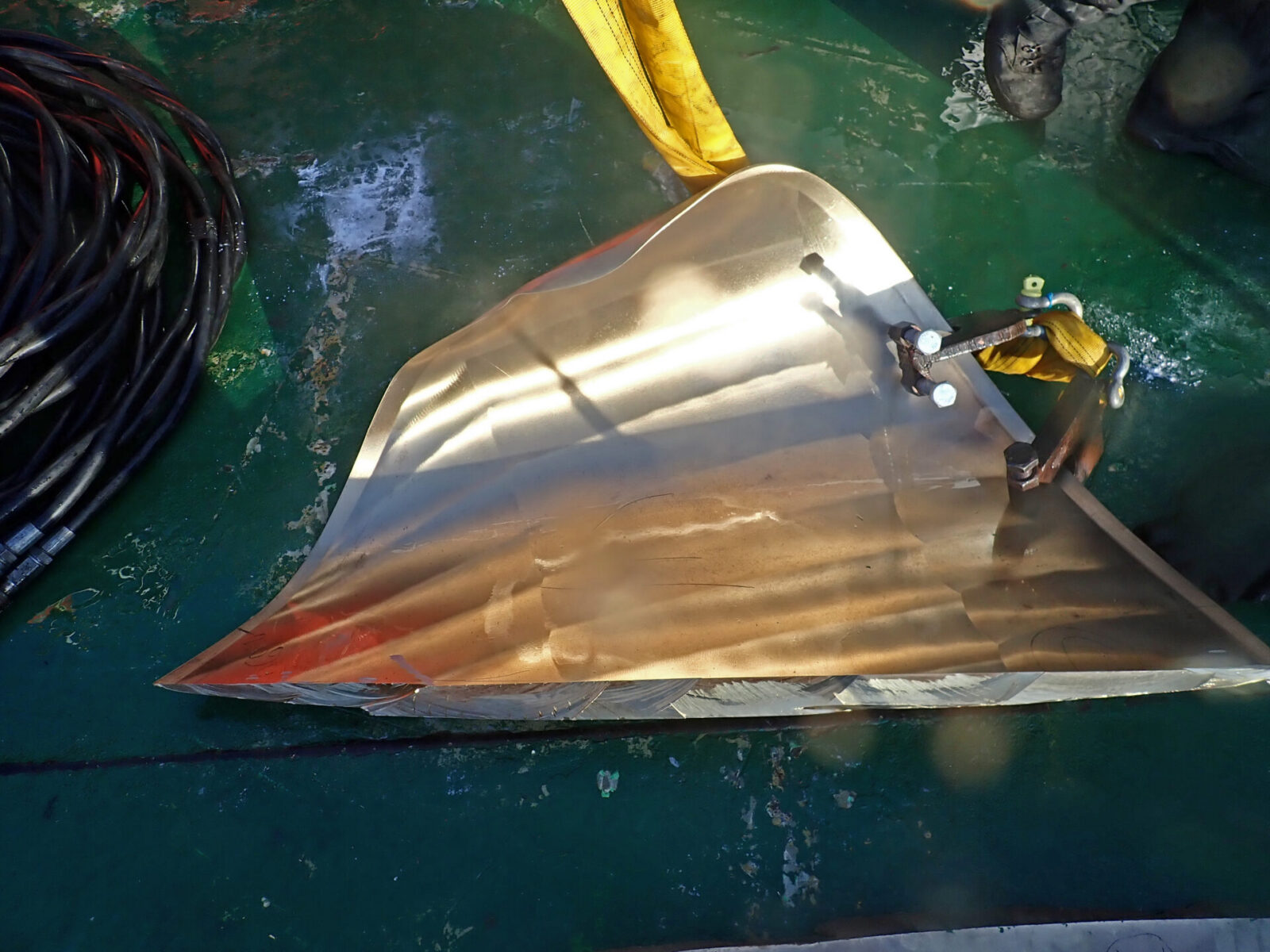
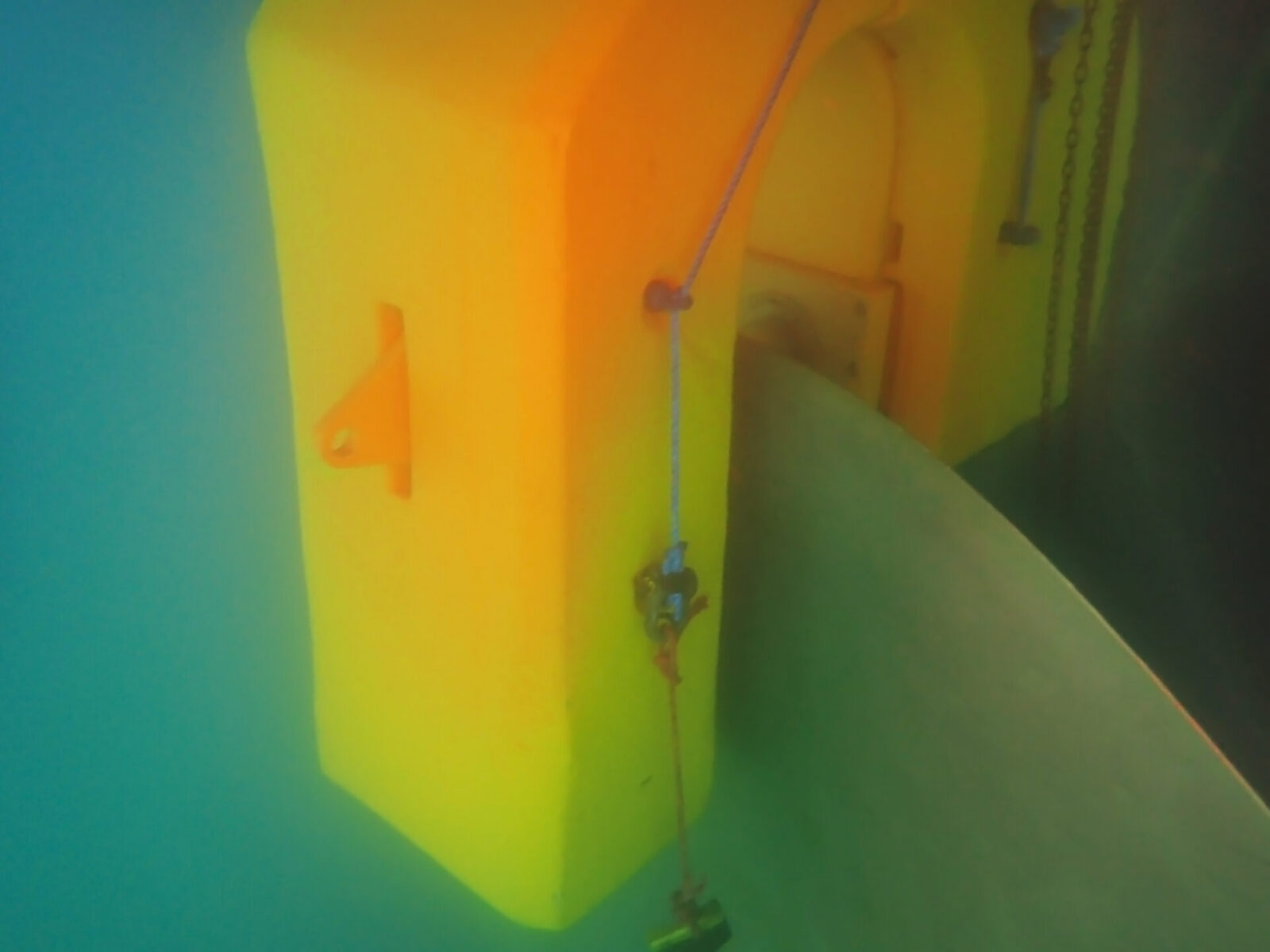
Our divers used our specially-developed cold straightening equipment to carefully bend the damaged sections back towards their original shape. This technique allows blades to be repaired without applying heat or removing the propeller from the vessel.
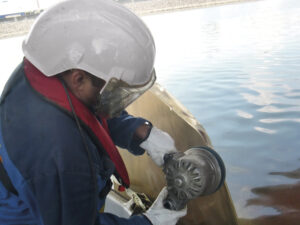
After all four blades had been straightened, the edges were ground smooth. A final inspection was carried out in the presence of a class representative, and the repair was approved.
The operation was successfully completed without removing the propeller or taking the vessel into drydock.
Propeller blade cropping and balancing in Portugal
A different approach was required during an operation in Caniçal, Madeira, where our team attended a 63-meter cargo vessel with a damaged four-bladed propeller.
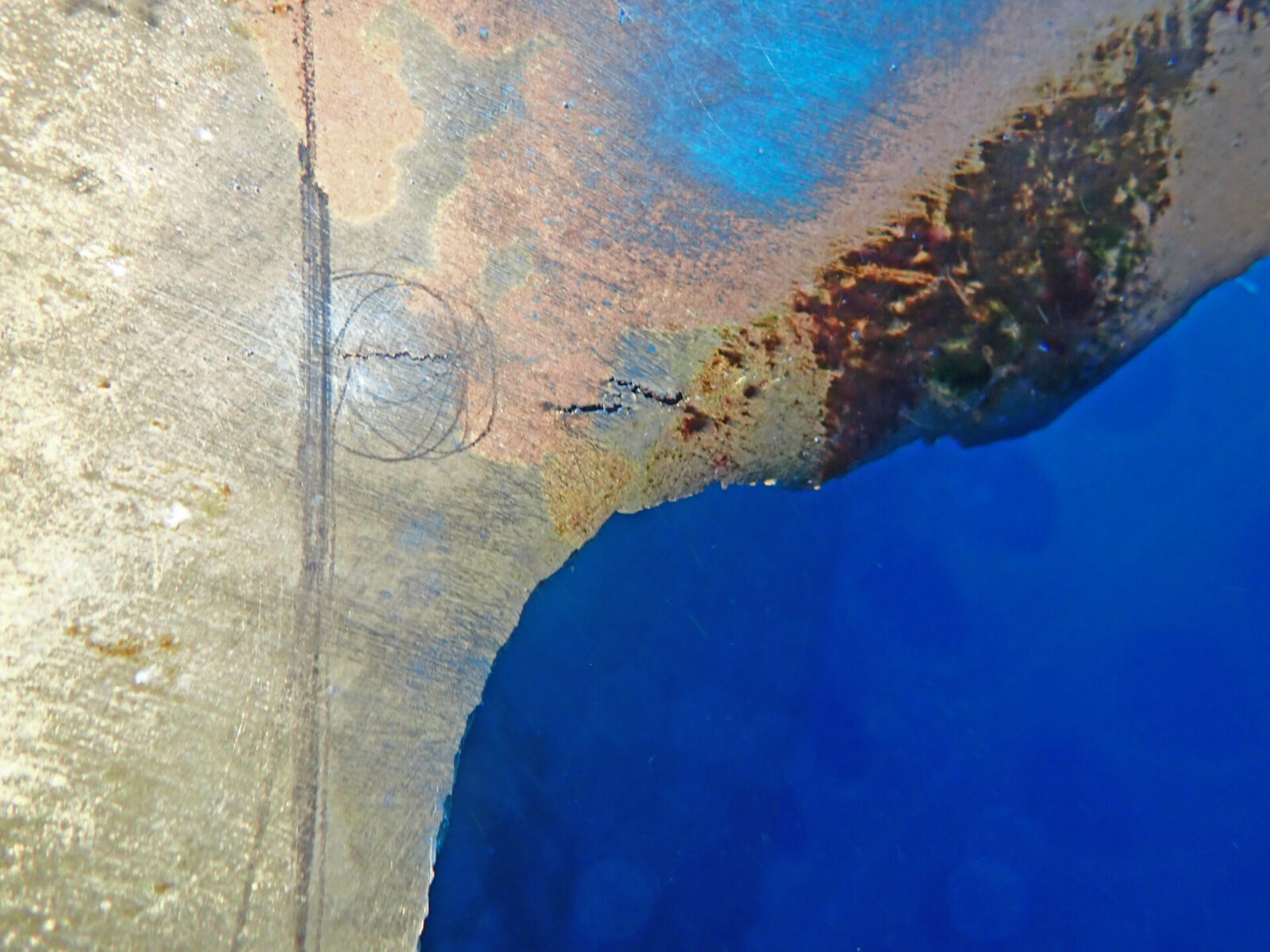
One of the blades had lost a substantial section of its tip, measuring approximately 340 mm in length and 180 mm in depth. A crack was also discovered next to the missing piece, making it necessary to remove the affected section.
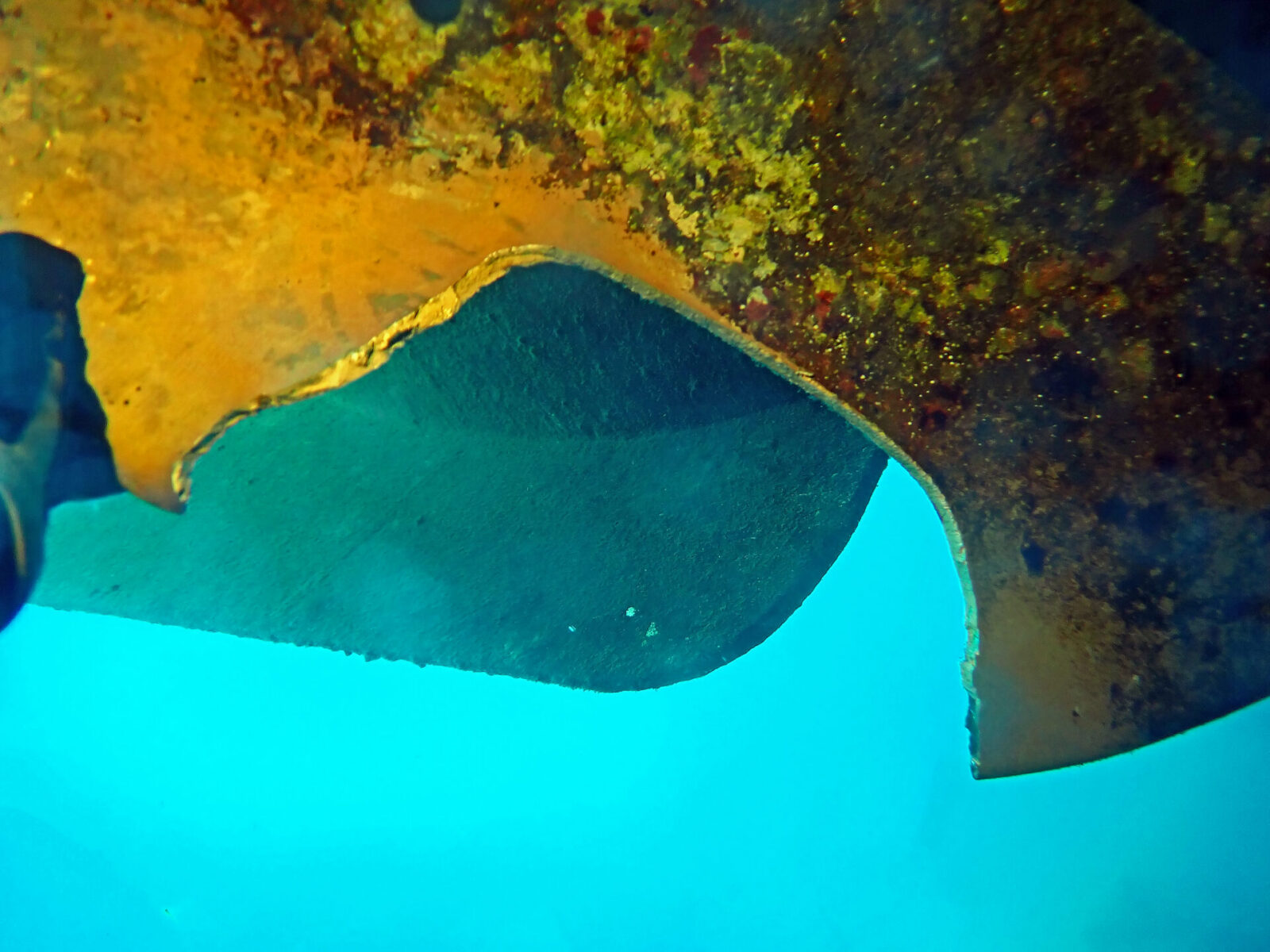
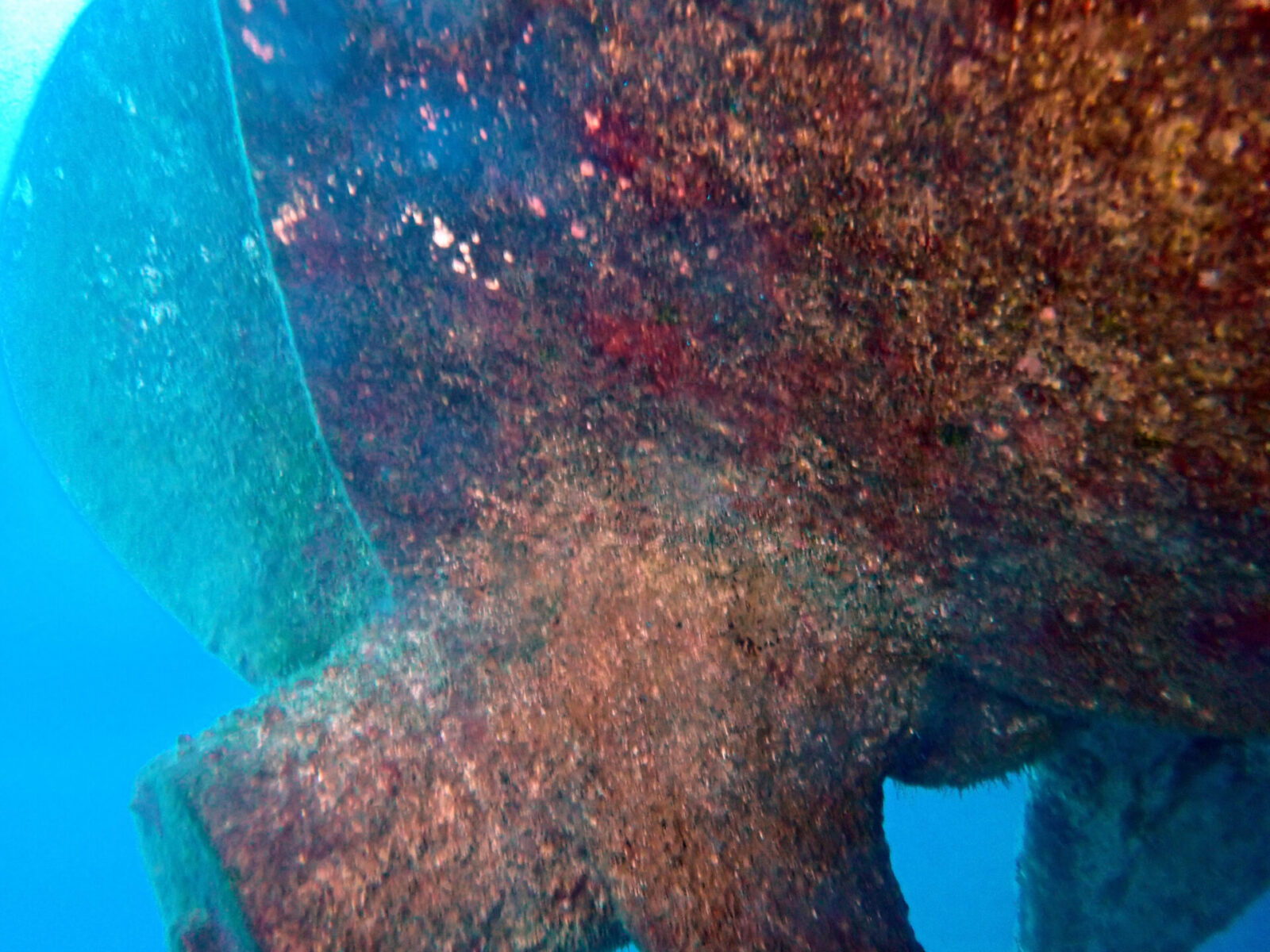
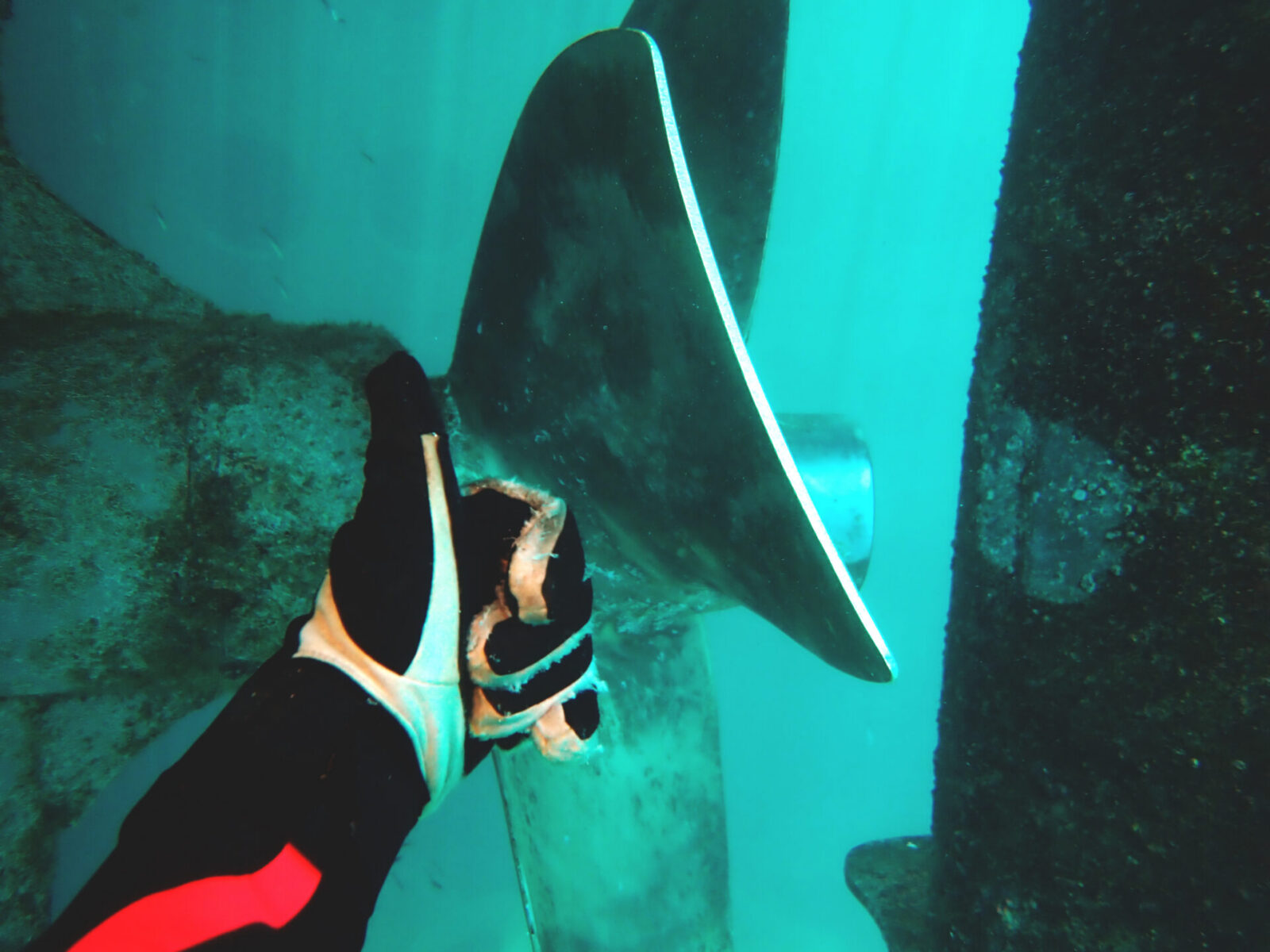
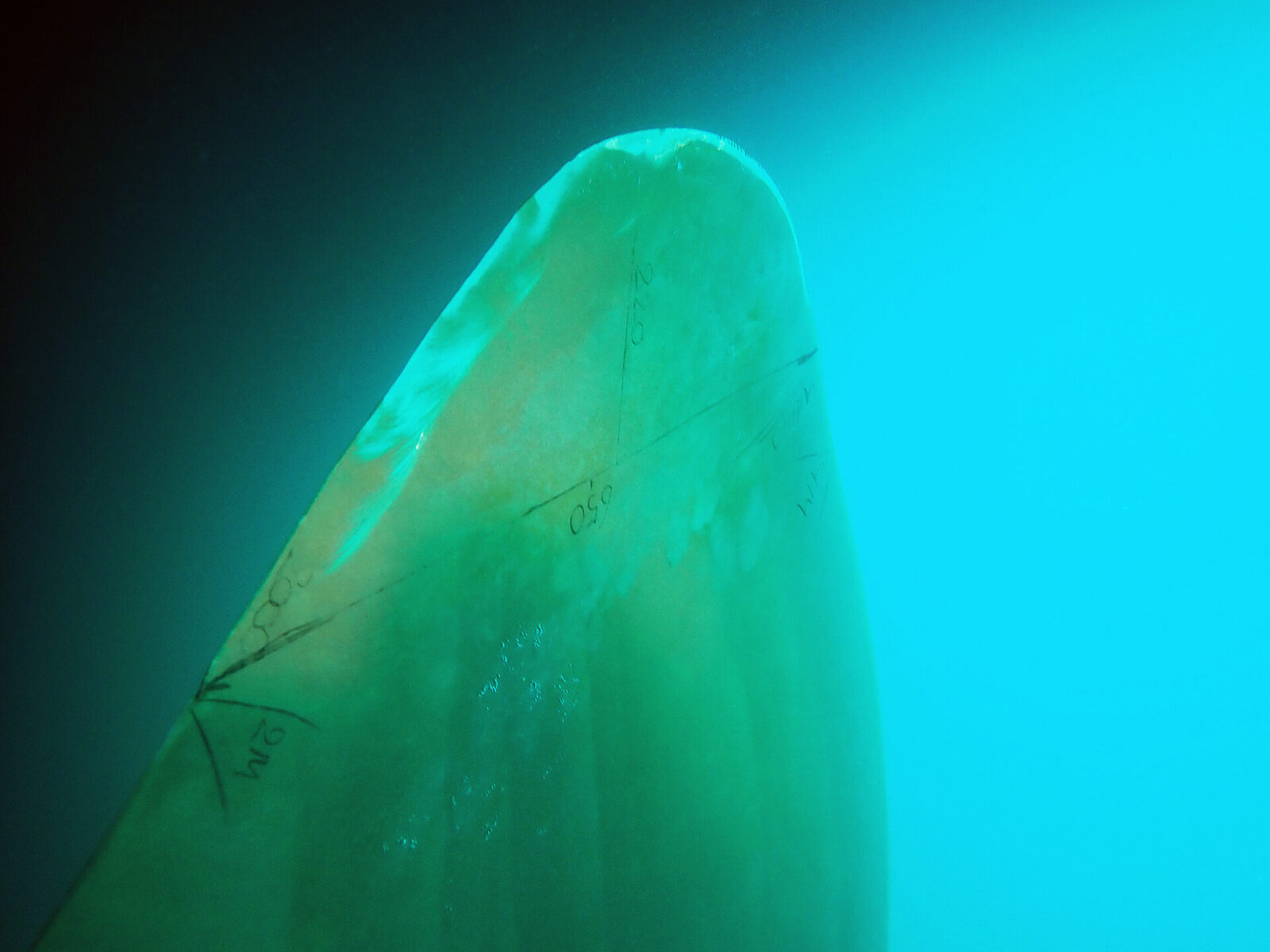
Before the repair could begin, our divers had to clean the propeller, which was heavily covered with marine fouling, including barnacles, calcium deposits and slime. Once the surfaces were accessible, the damaged blade could be inspected and the cutting line accurately marked.
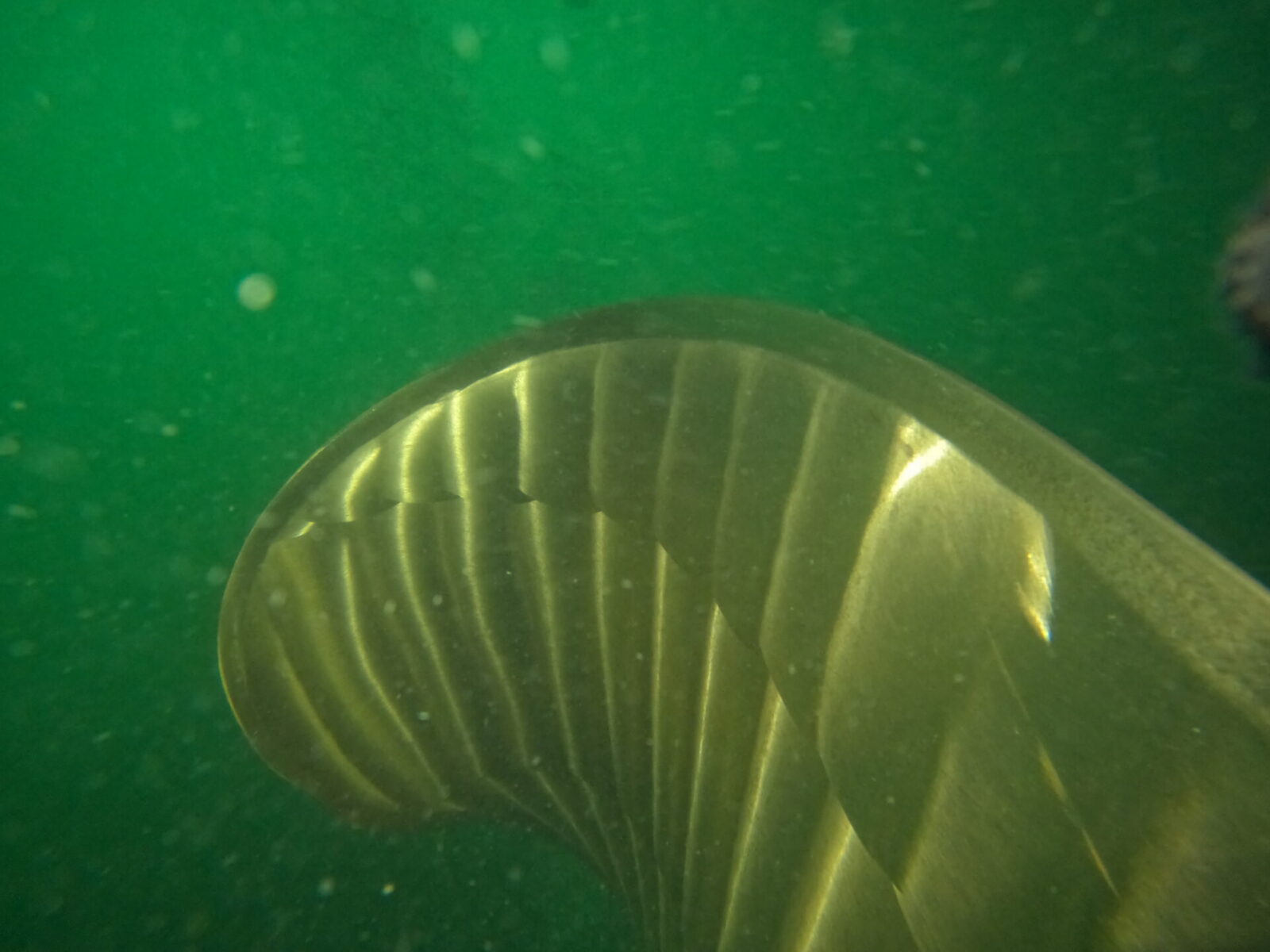
The affected blade was cropped along a 574 mm cutting line, removing both the damaged section and the adjacent crack.
Simply removing this material, however, would have left the propeller unbalanced. To compensate, our technicians cropped a corresponding section from the opposite blade, removing a similar amount of material.
The two remaining blades were undamaged and did not require modification.
The precisely planned cropping allowed the damaged section to be removed while maintaining the balance of the propeller.
Extensive propeller damage on tanker in Denmark
Another challenging operation took place in Skagen, Denmark, where our team was mobilized to inspect and repair the propeller of a 250-meter crude oil tanker.
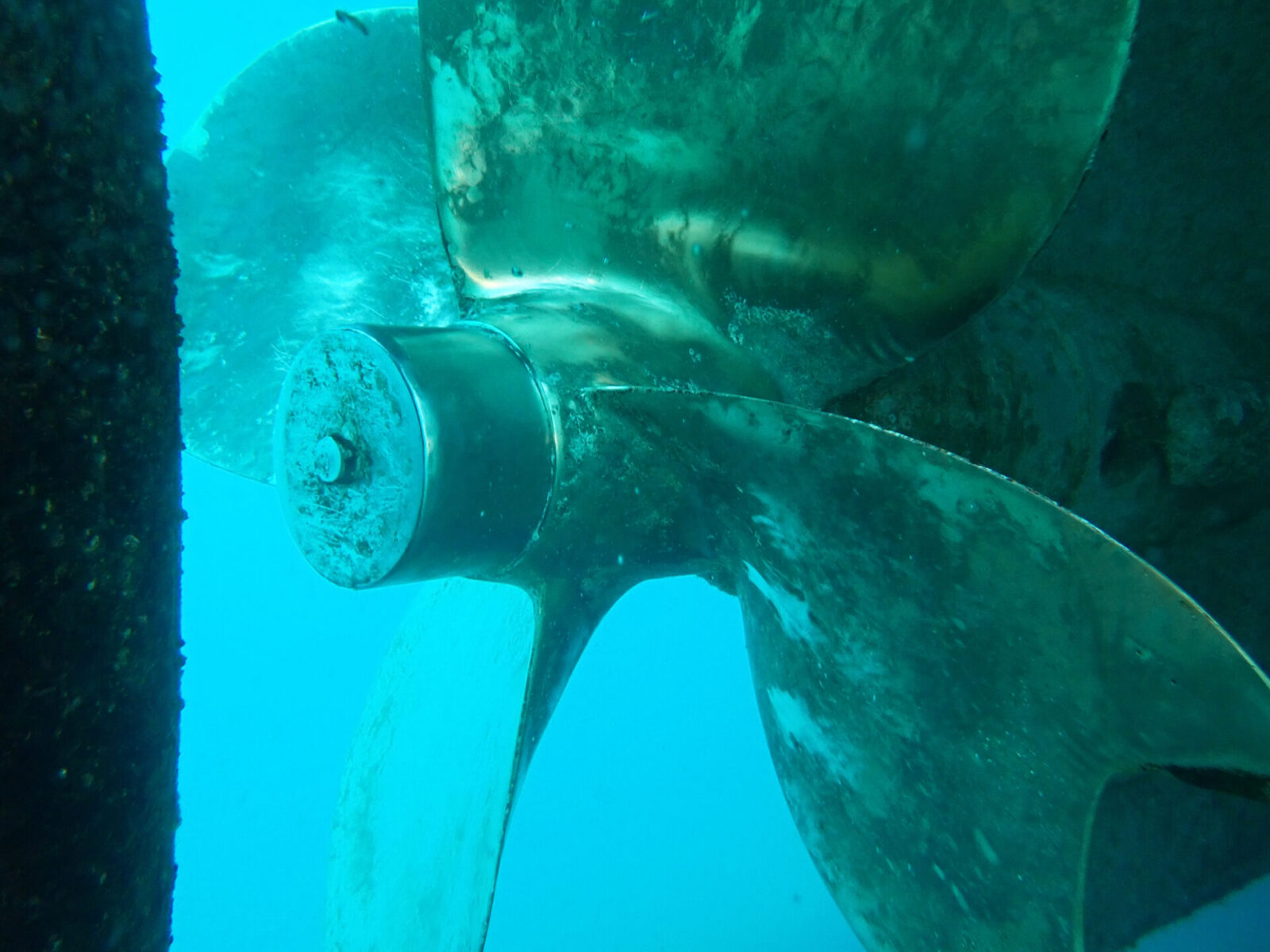
All four blades had sustained severe damage. One blade tip was bent by more than 90 degrees, while the other three blades had sections of their tips missing.
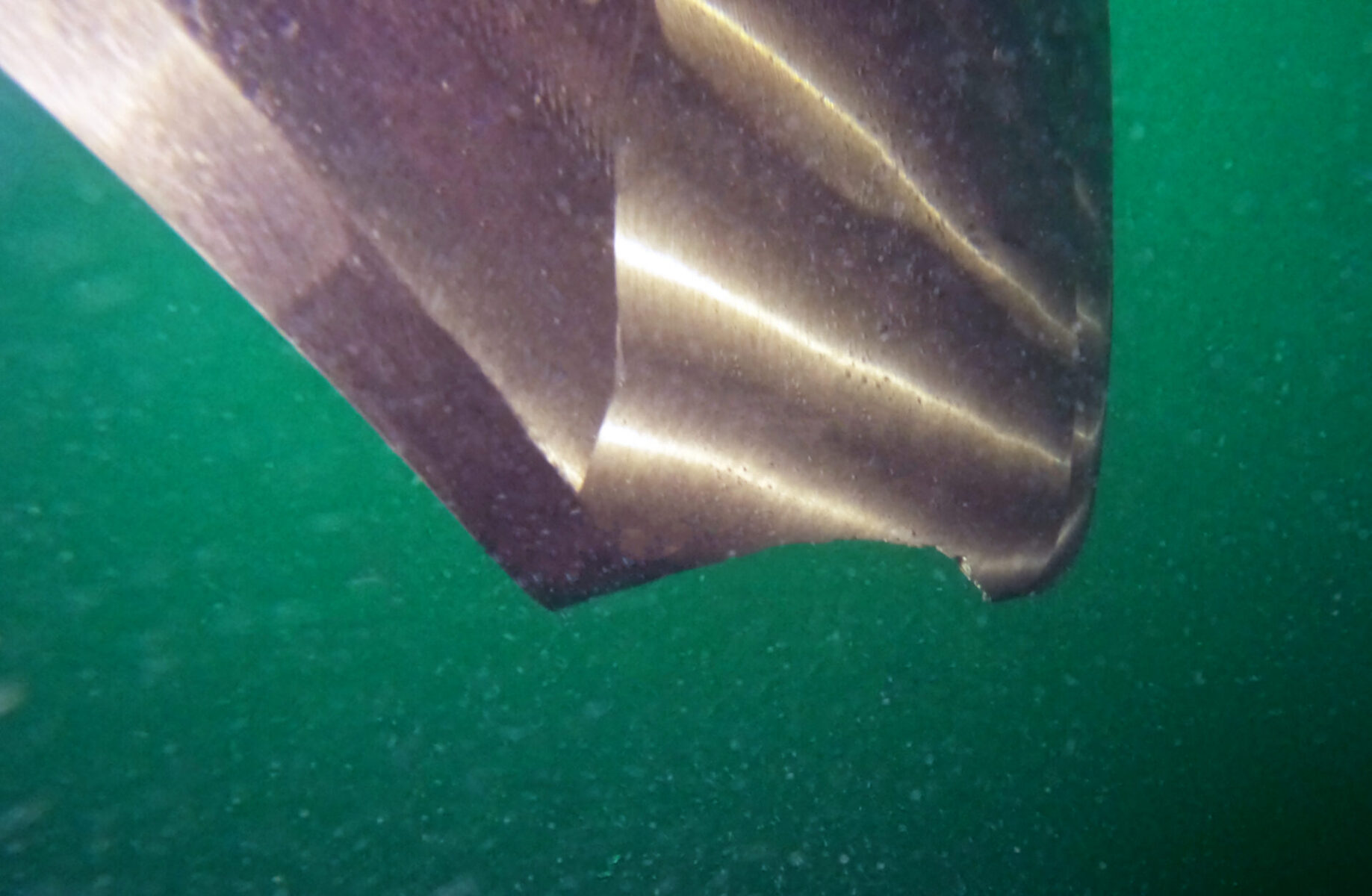
Given the extent of the damage, blade cropping was selected as the repair approach rather than attempting to straighten the heavily deformed sections.
Our team traveled from Antwerp to the vessel’s location, where a workboat was required because the mooring position could only be reached from the water.
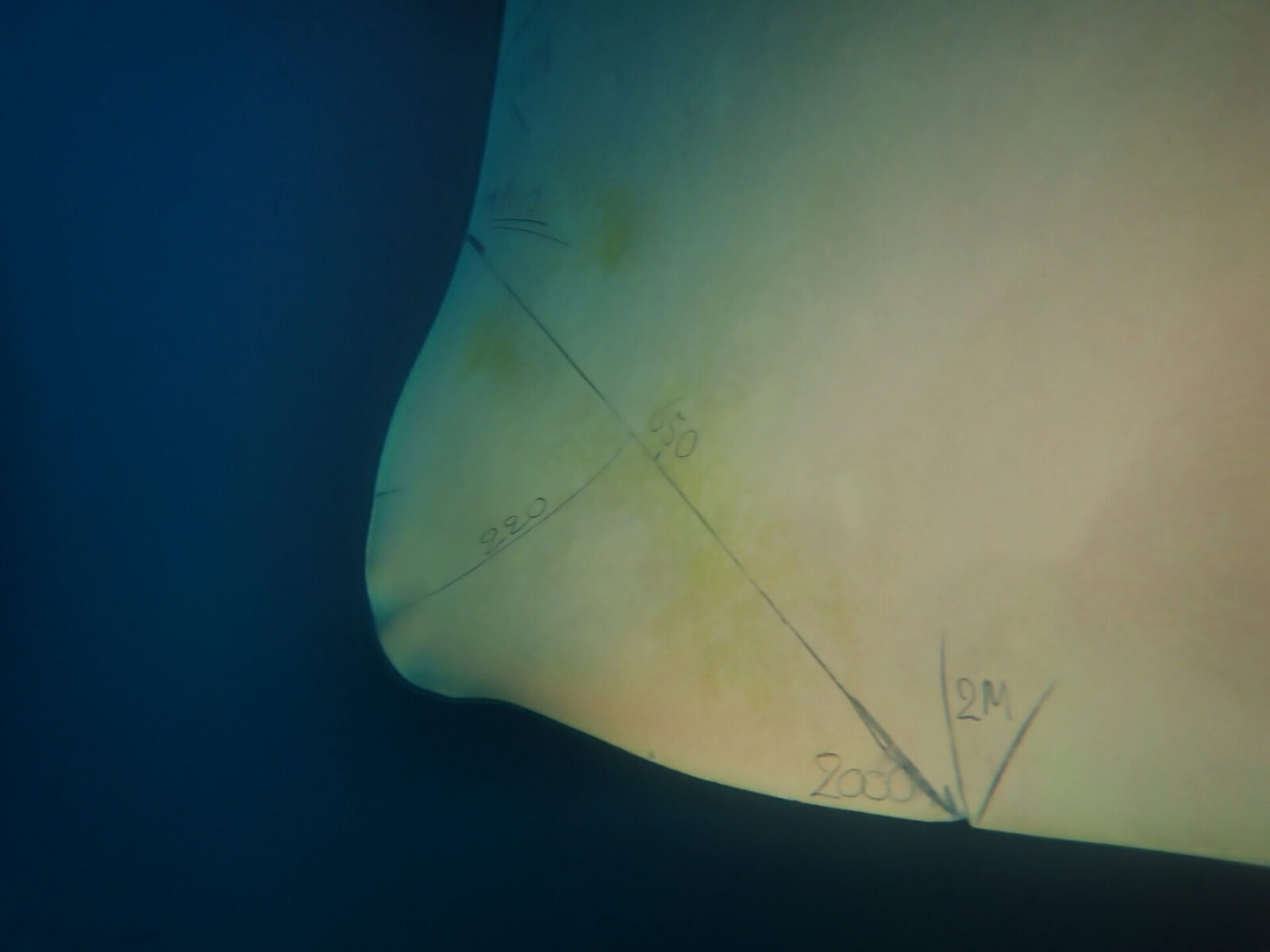
A detailed underwater inspection was carried out to measure the damaged areas and determine the appropriate cropping dimensions.
The repair plan involved removing corresponding sections from opposite blades to maintain the propeller’s balance. Measurements were taken from the blade roots along the leading and trailing edges, allowing the cutting lines to be established accurately.
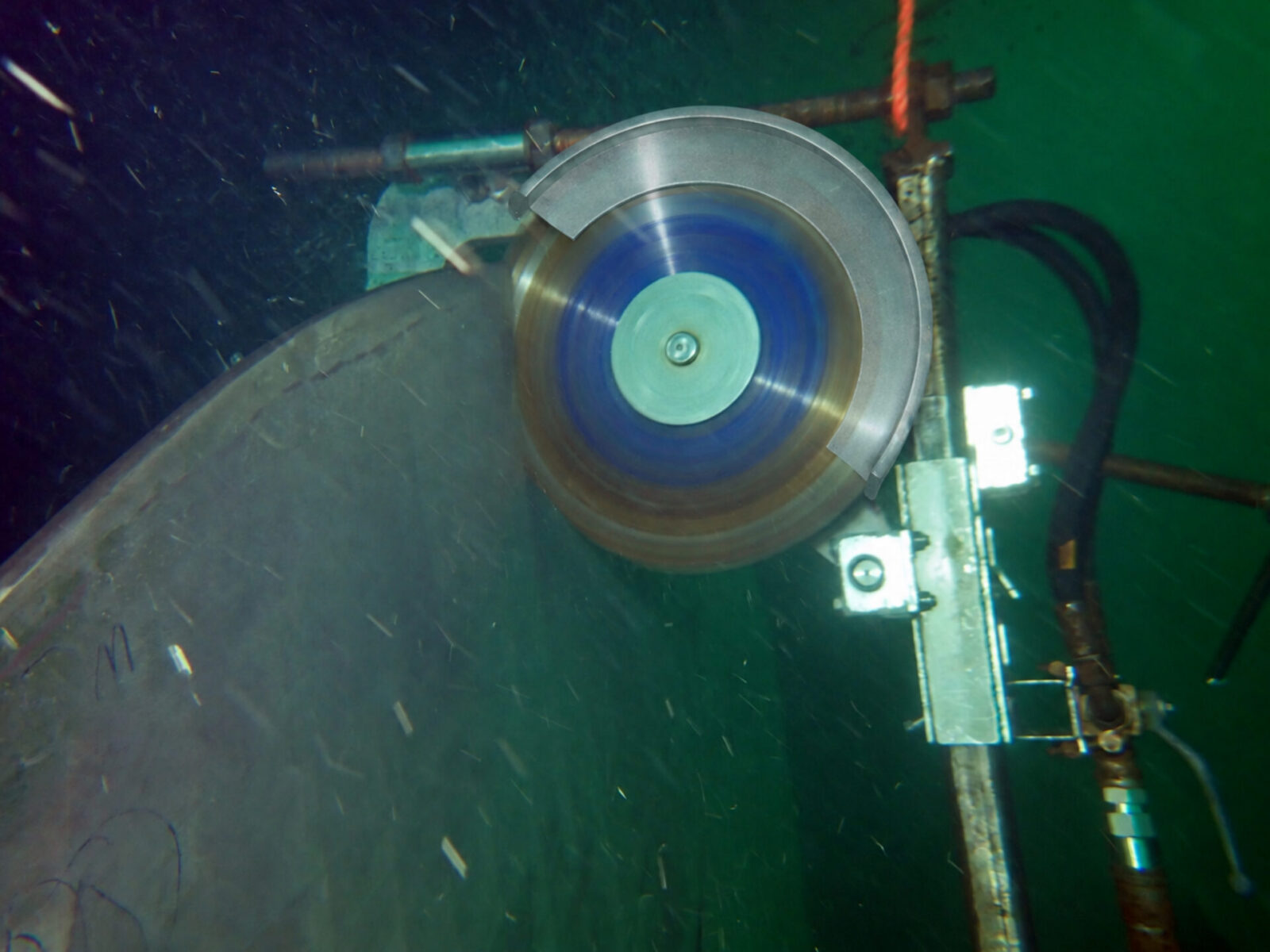
The resulting cropping plan accounted for the different damage patterns on the four blades, with matching dimensions established for each opposing pair.
The operation illustrates the importance of accurate measurements and careful planning when dealing with extensive damage across an entire propeller. Rather than treating each blade separately, the repair approach must consider the propeller as a complete system.
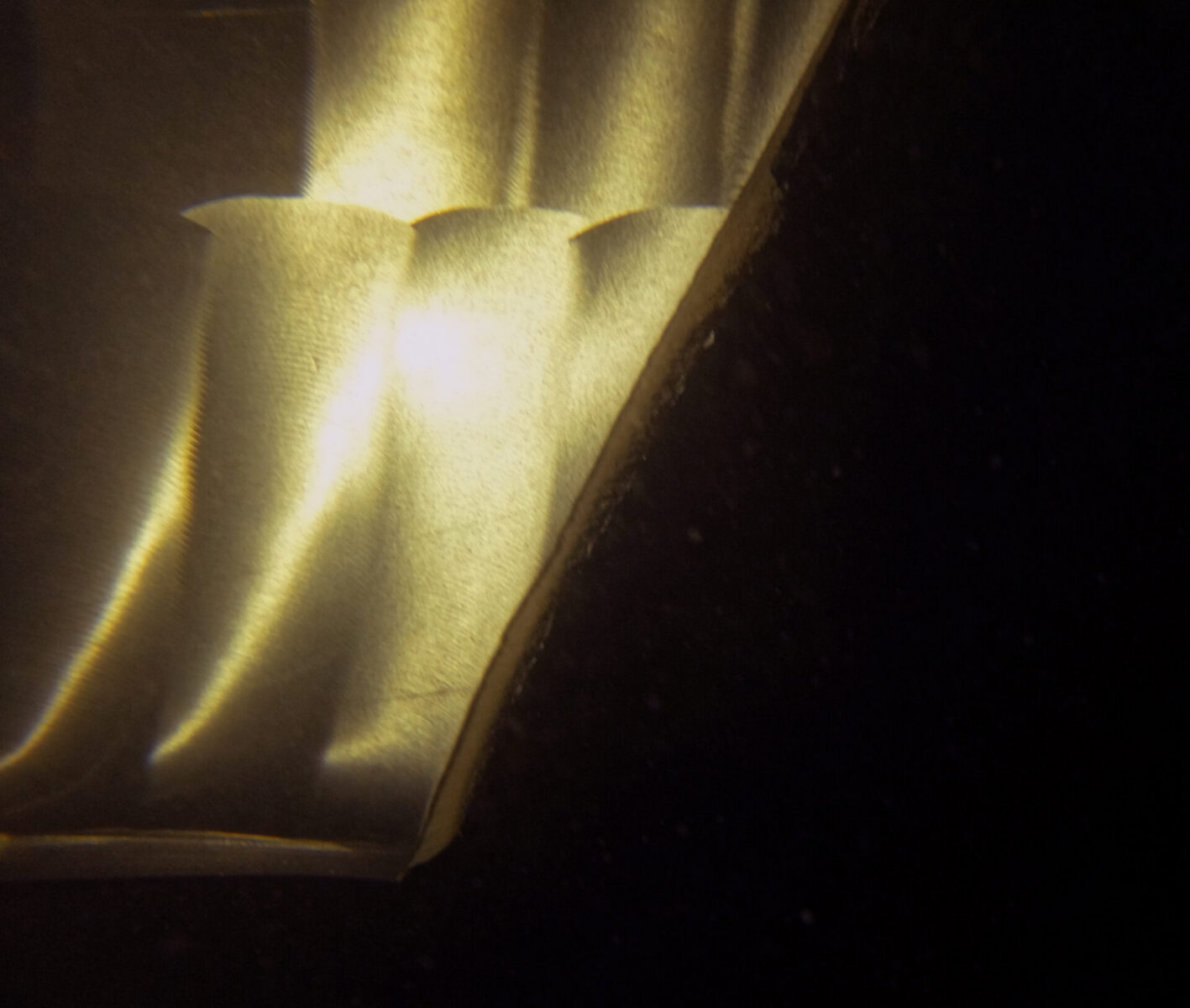
Choosing the right underwater repair method
The three operations in this article demonstrate how our experience and equipment allow us to address a wide range of propeller damage, from bent blade tips to extensive material loss.
Accurate measurements are essential in every scenario. An incorrectly executed repair can leave a propeller unbalanced, resulting in vibrations and reduced propulsion efficiency.
By combining our underwater experience with specialized tools and technical expertise, we can carry out these operations directly on the vessel while it remains afloat. This helps shipowners restore propulsion performance as efficiently as possible while minimizing downtime, and avoiding unnecessary drydock visits.